Get in touch
Portfolio

Selected work

A brief overview of the teams and efforts I’ve led at Kong, Hologram, Twilio, and SendGrid.

Additional information and case studies are available upon request.

VP of Design · 2024 – 2026

Kong

API and AI connectivity platform: gateways, developer portals, and an AI agent for platform teams.

Stage
Series E · 800 employees
My org
Design · 5 → 18
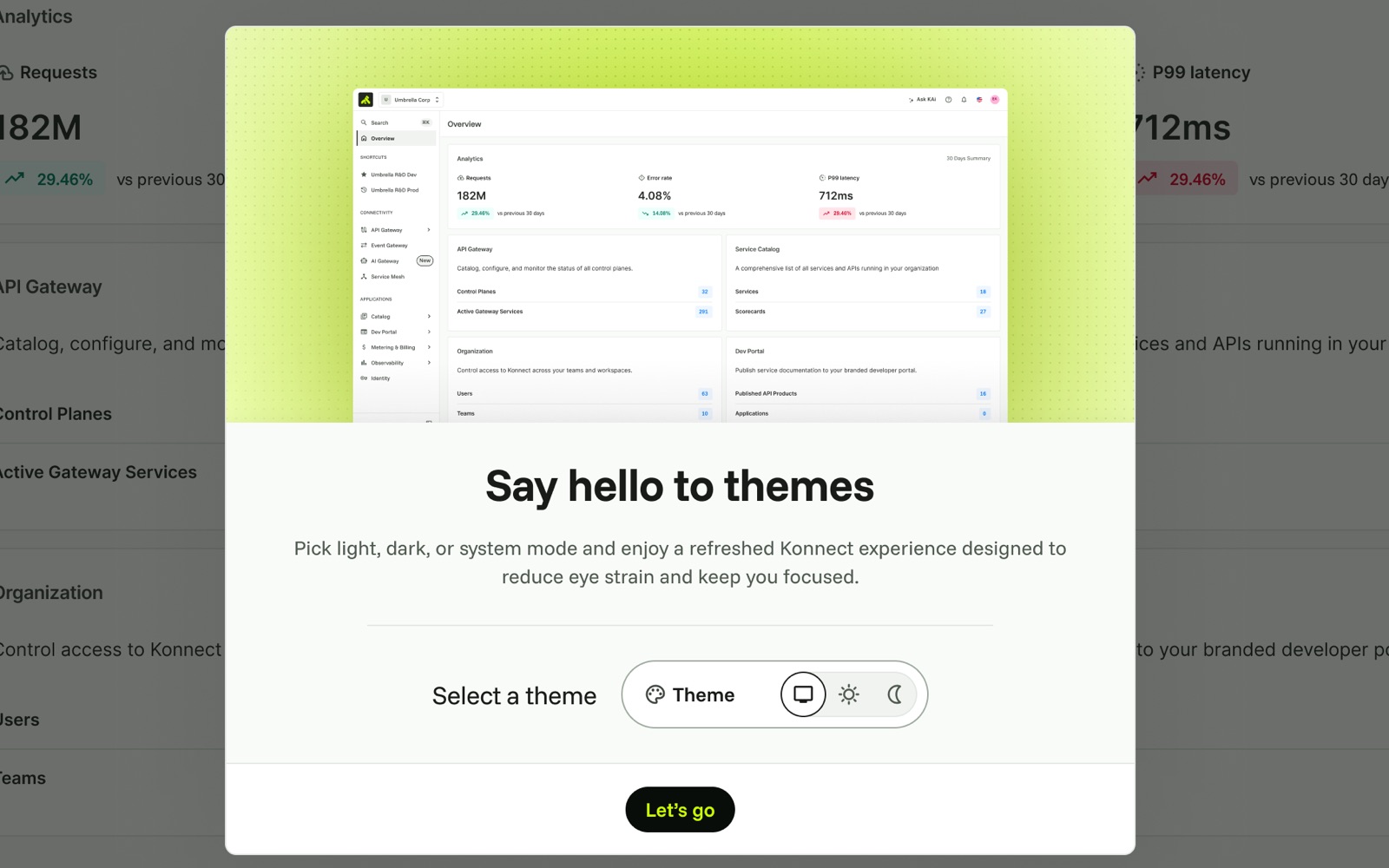
Konnect welcome modal: Say hello to themes, with a light, dark, and system theme picker
  • 2026
  • Visual design
  • Design systems
  • Accessibility

Carrying a new brand into the product

When Kong rebranded around electric lime, I led an effort to adapt the brand for a product context: new day and night themes, a healthier design system, and high-contrast mode, released in stages to protect quality.

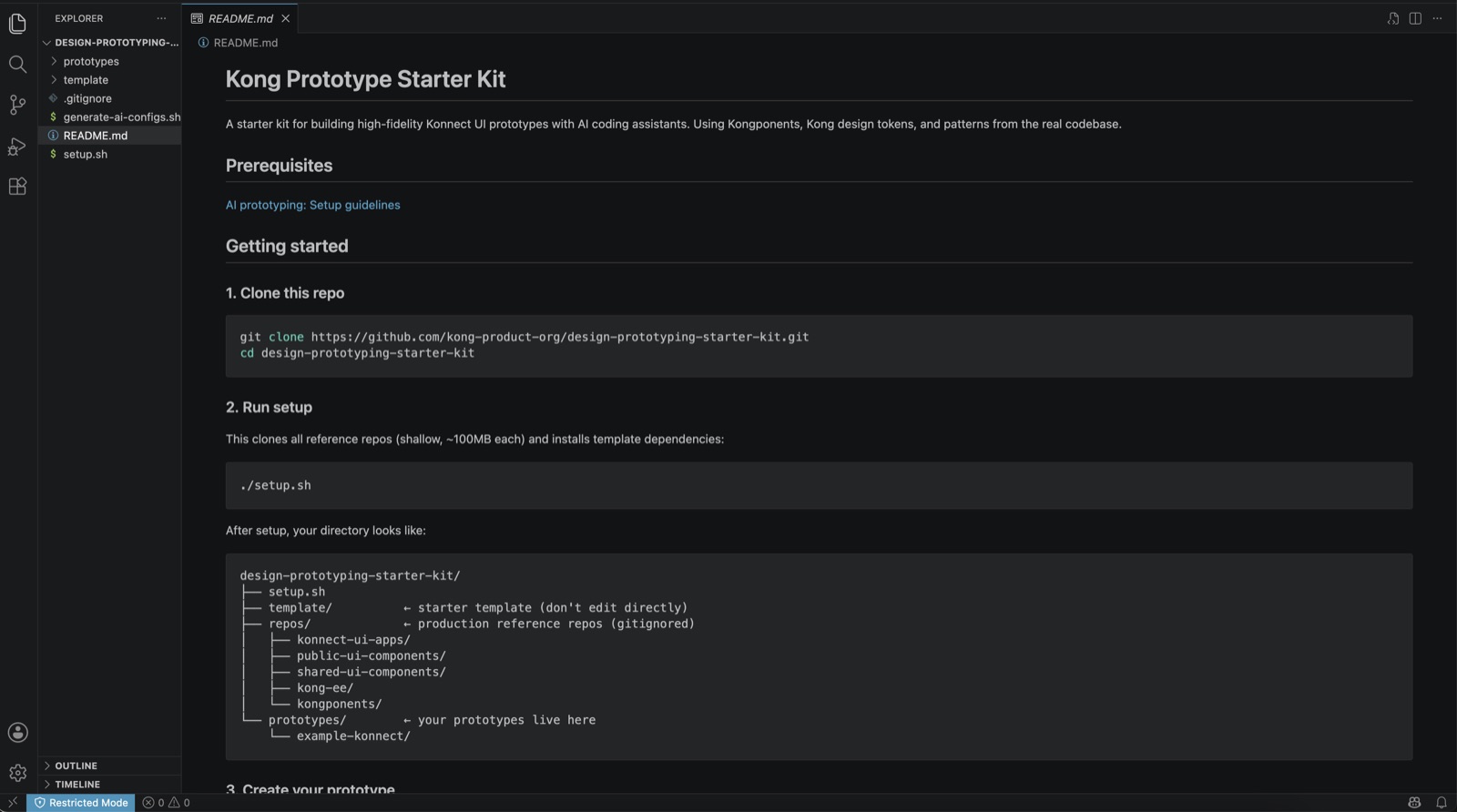
README of the Kong Prototype Starter Kit repo: building Konnect UI prototypes with AI coding assistants
  • 2026
  • AI
  • Enablement
  • Tooling and workflows

Making our design team AI-native

I led our team as early adopters of AI, picking up new tools as they got better. We started with content guidelines and a custom GPT to apply them, used AI for research planning and synthesis, and then prototyped in Claude Code, connected to our production code repos and design system, along with the Figma MCP server. A reusable starter kit, hands-on workshops, and 1:1 coaching got every designer to a working prototype, and designers started shipping their own pull requests.
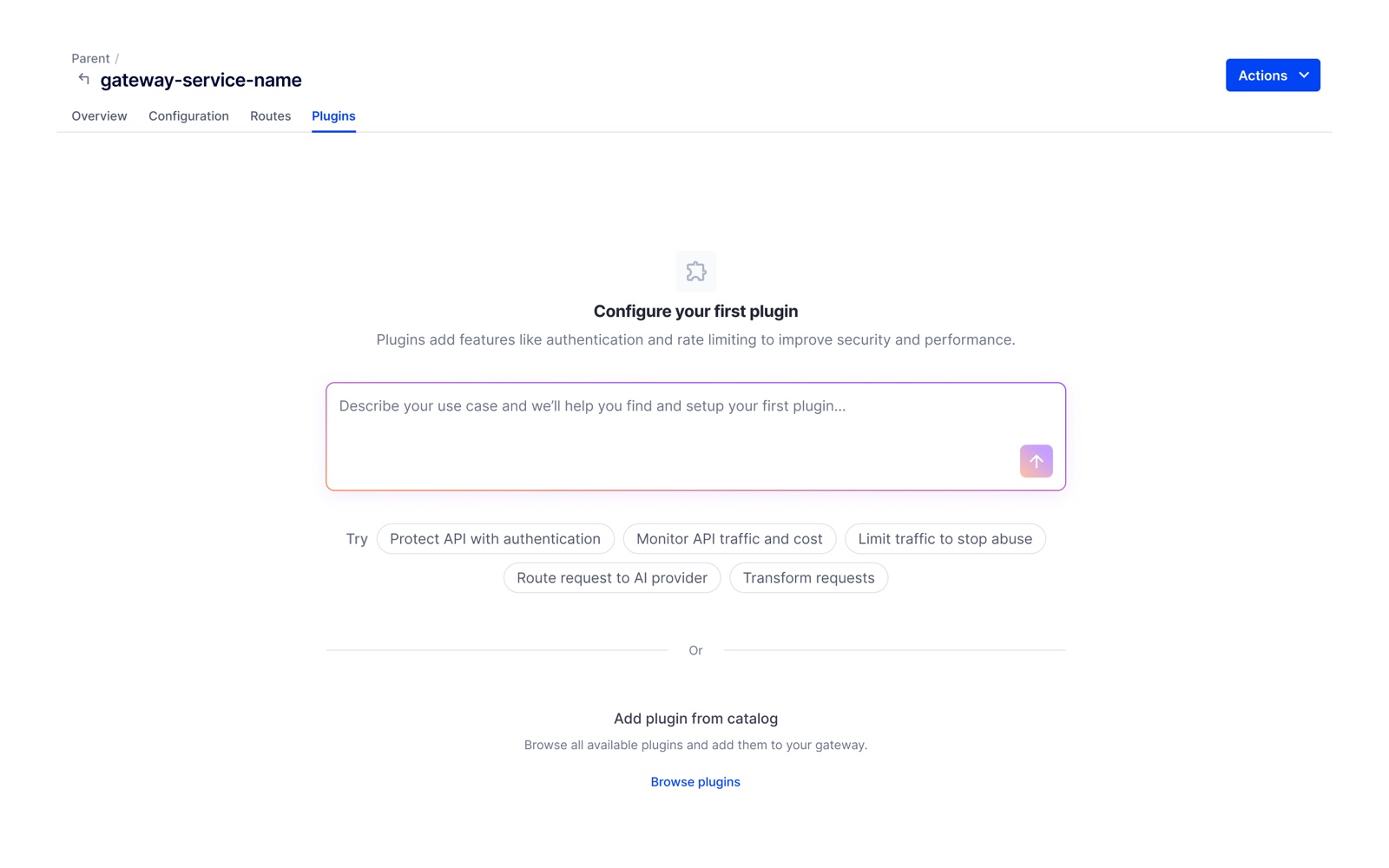
KAi built into the Konnect plugins page: describe your use case to find and set up a plugin, with suggested prompts
  • 2026
  • AI
  • Conversational UX
  • Platform patterns

Designing for Kong’s platform AI agent

I led design for Kong’s AI agent: core chat components, entry points across the platform, and guidance for designing non-deterministic experiences around intent rather than exact UI. We quickly moved beyond read-only question-and-answer chat to experimenting with AI for complex tasks, like configuring plugins and designing dashboards and dev portals, for greater impact.

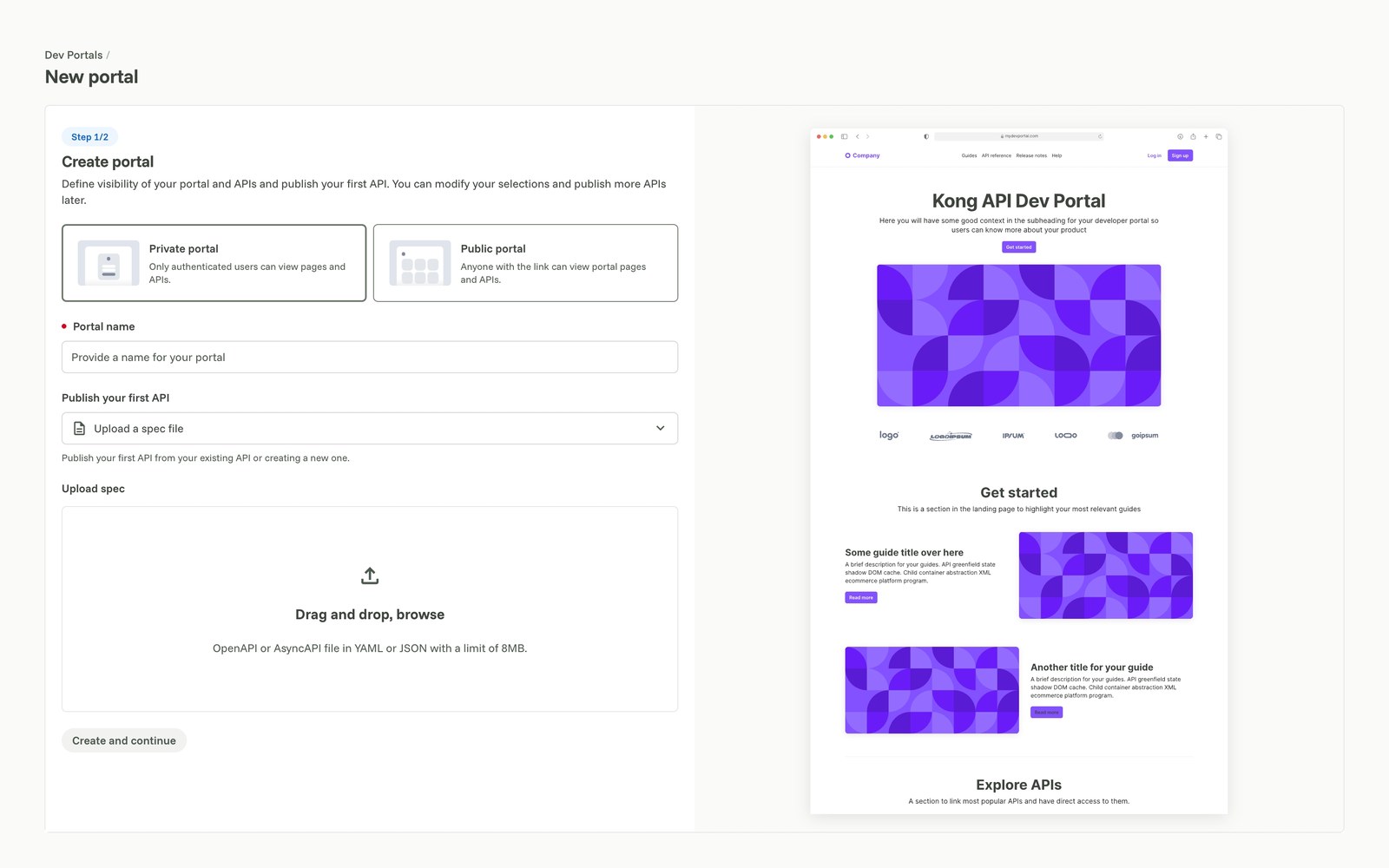
Konnect New portal flow, step 1 of 2: choose private or public, name the portal, and upload an API spec, beside a live preview of the developer portal
  • 2025
  • Onboarding
  • Developer experience

Revamping the Dev Portal experience

Kong’s original Dev Portal had significant usability issues, and adoption was slow. As a top company priority, I led design deep dives and alignment sessions and held a high quality bar for a brand-new experience built around delightful onboarding. Adoption doubled after release and continued to meet and exceed targets.

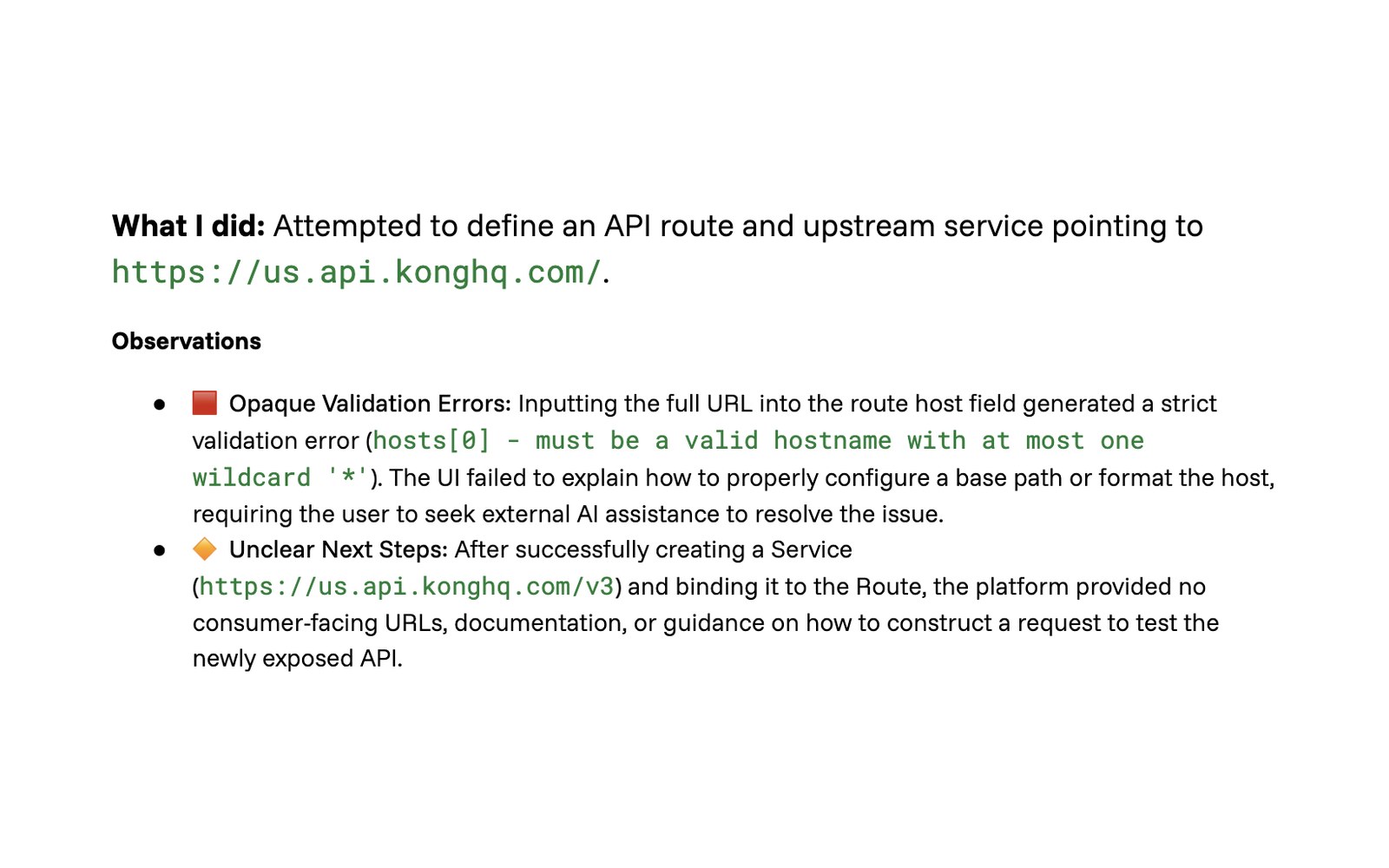
Journey walkthrough finding: defining an API route and service, with observations on opaque validation errors and unclear next steps
  • 2026
  • Customer journeys
  • Cross-functional alignment

Driving quality improvements through hands-on product usage

We defined three key user journeys that cut across products, then ran walkthroughs with PMs, designers, and engineers to build shared empathy and a prioritized list of cross-team fixes.

SVP of Product & Design · 2021 – 2024

Hologram

Cellular IoT connectivity: global SIMs and a platform to manage connected devices.

Stage
Series B · 175 employees
My org
Product & Design · 10 → 15
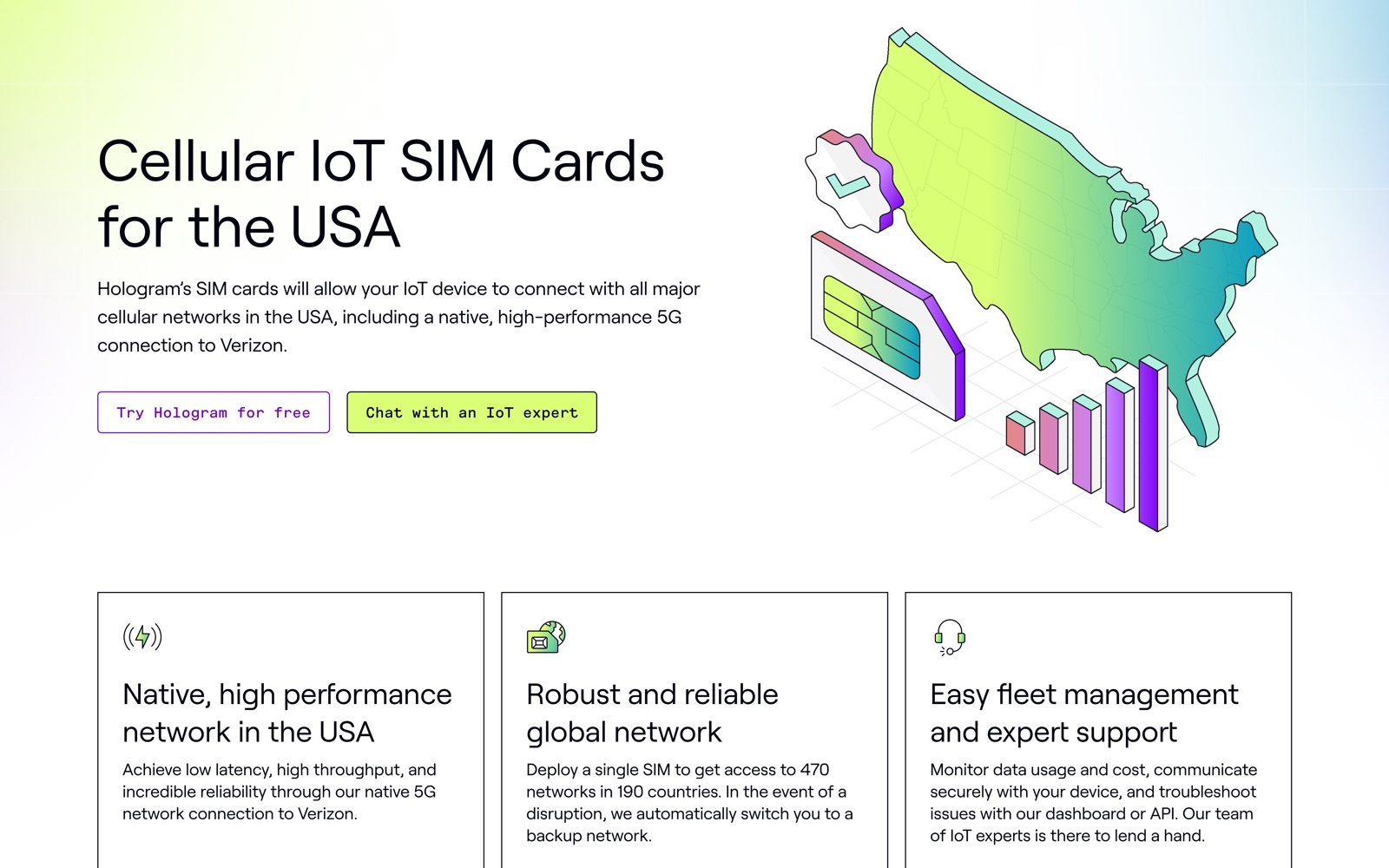
Hologram landing page: Cellular IoT SIM Cards for the USA, with an isometric illustration in the refreshed brand
  • 2022
  • Visual language
  • Platform consistency

Rolling out a new brand across web, store, and product

The team had started a new brand direction. I made sure it reached beyond the website to the online store and product, and that it was applied with care. Grounded in internal and customer interviews, we defined the brand’s personality, and my team educated the company on our core attributes: Radiant, Fearless, and Dependable.

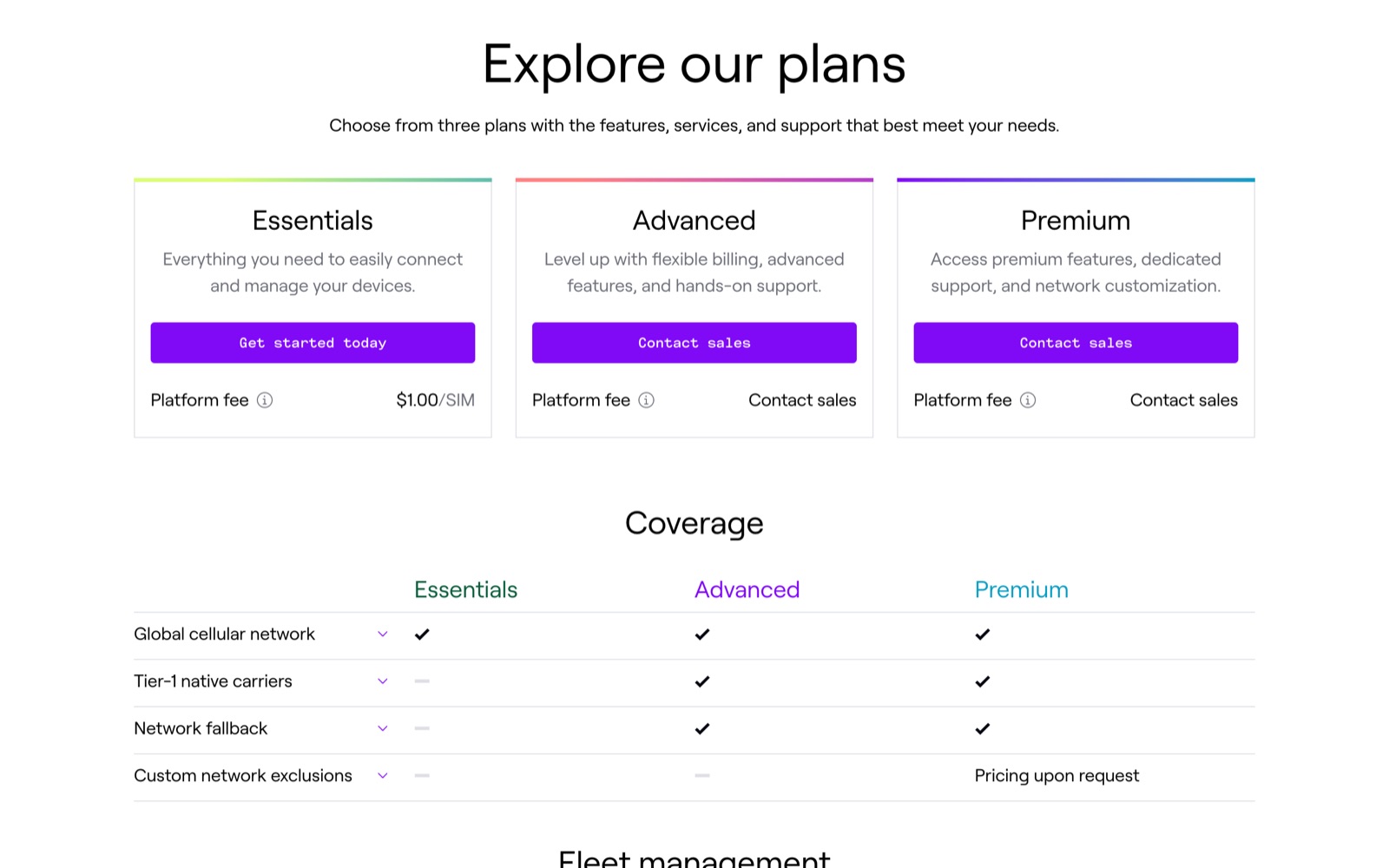
Hologram pricing page comparing the Essentials, Advanced, and Premium plans
  • 2023
  • Monetization
  • Sales enablement
  • Hands-on

Optimizing pricing and packaging

I led an effort to optimize pricing and packaging: three clear plans with simpler per-MB data rates, and a recurring cadence for reviewing pricing across product, sales, and finance. I also personally designed new sales decks and a pricing calculator hands-on, giving sales executives a reliable, standardized way to quote and communicate pricing to customers.

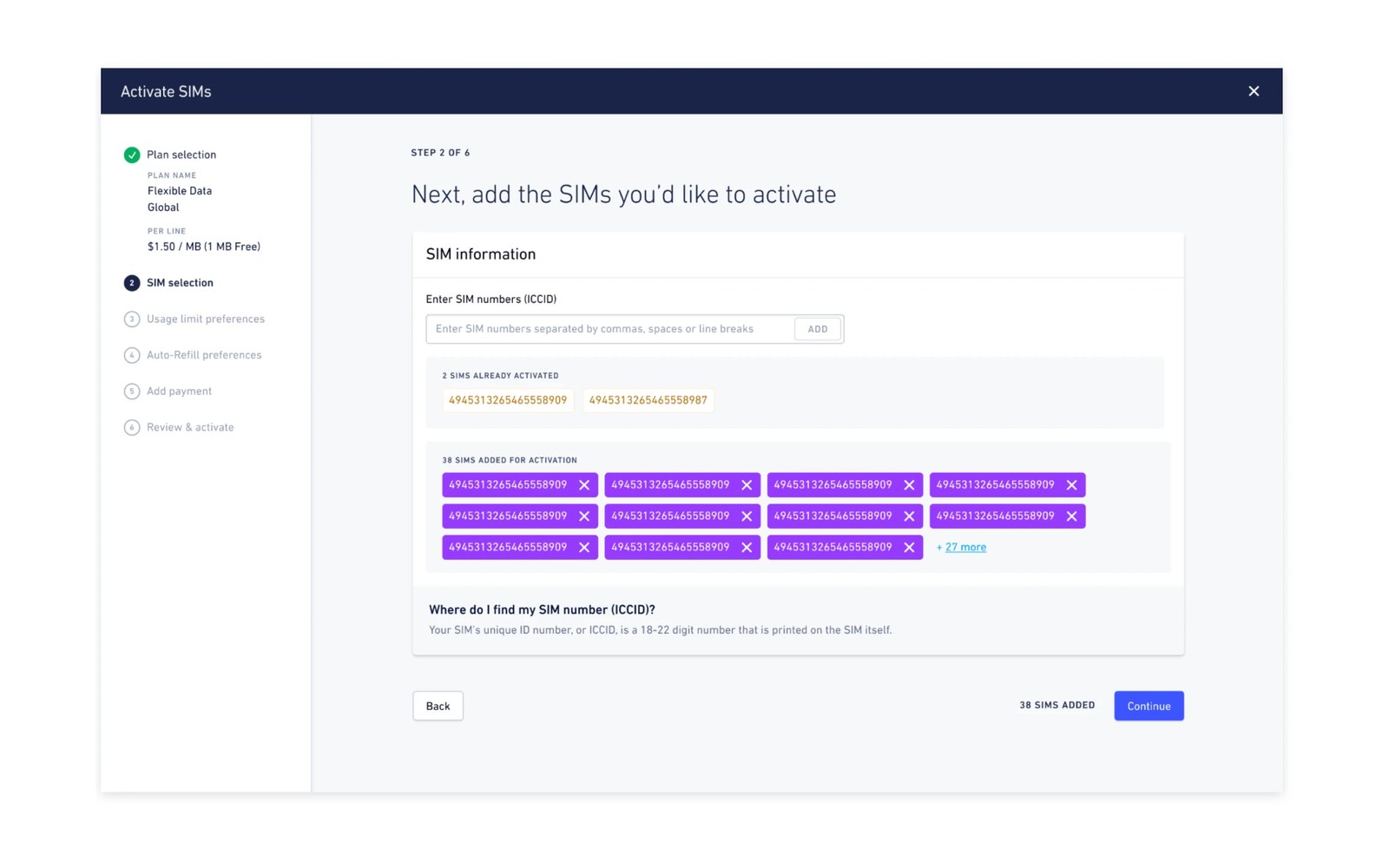
Hologram Activate SIMs flow, step 2 of 6: 38 SIMs added for activation, with 2 already-activated SIMs flagged
  • 2022
  • Complex workflows
  • Usability

Revamping SIM management and bulk activation

We redesigned how customers manage SIMs at scale: a new bulk activation flow for adding SIMs individually, by range, or by CSV upload, and a SIM detail view that brings status, last connection, carrier, tower location, and data usage together so teams can troubleshoot connected devices faster.

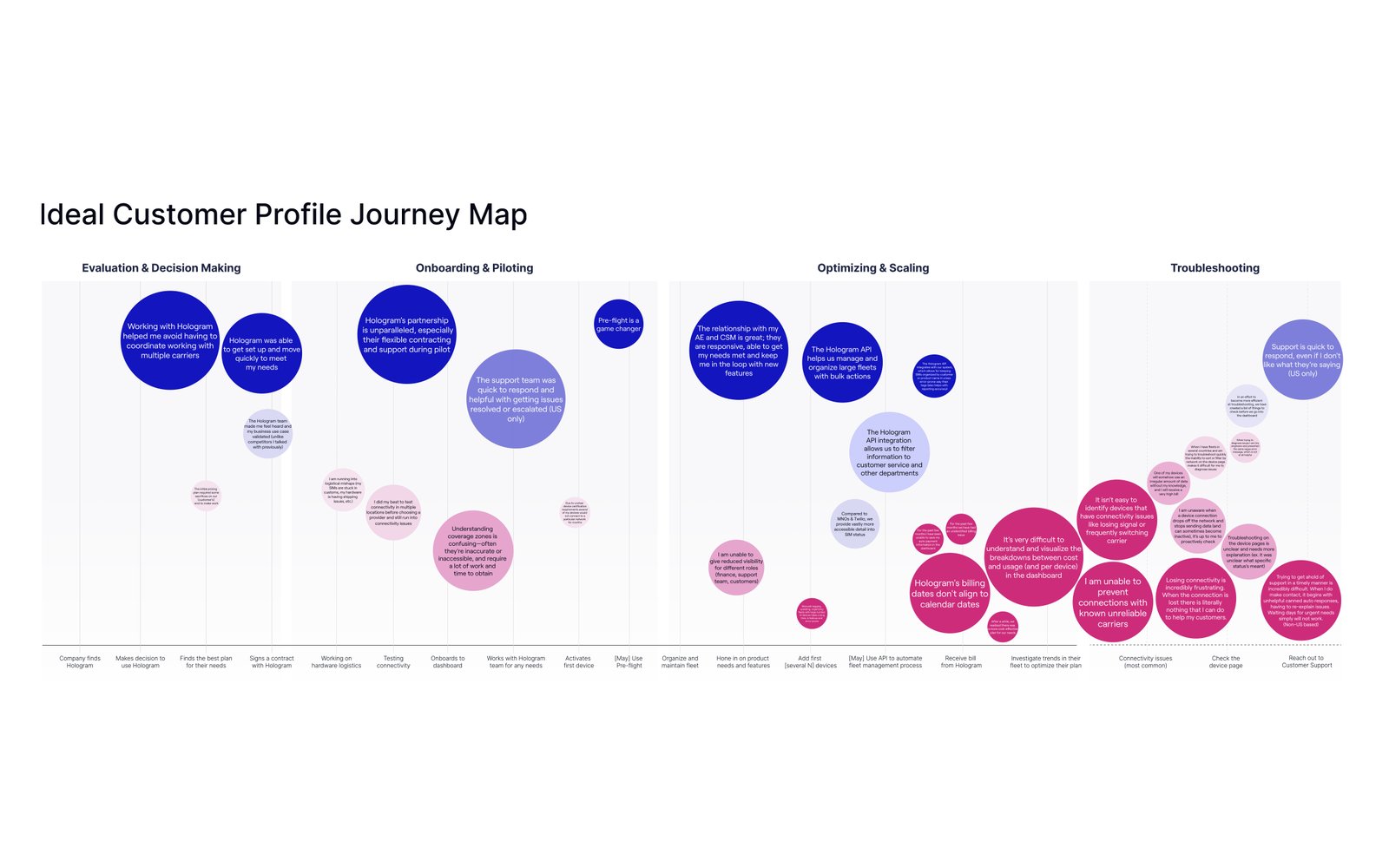
Ideal Customer Profile Journey Map, with customer sentiment plotted across evaluation, onboarding, and scaling
  • 2021
  • Research
  • Strategy
  • Journey mapping

Defining our ideal customer profile

I led research to define Hologram’s ideal customer profile: SMB and mid-market companies deploying a high number of lower-data-usage cellular devices, primarily in the US with secondary global markets. We then mapped their journey from evaluation through troubleshooting to show where we delighted customers and where we lost them.

VP of User Experience · 2019 – 2021

Twilio

Cloud communications platform: APIs for messaging, voice, video, and email.

Stage
Public (NYSE: TWLO) · 2,500 → 8,000 employees
My org
UX · 40 → 100
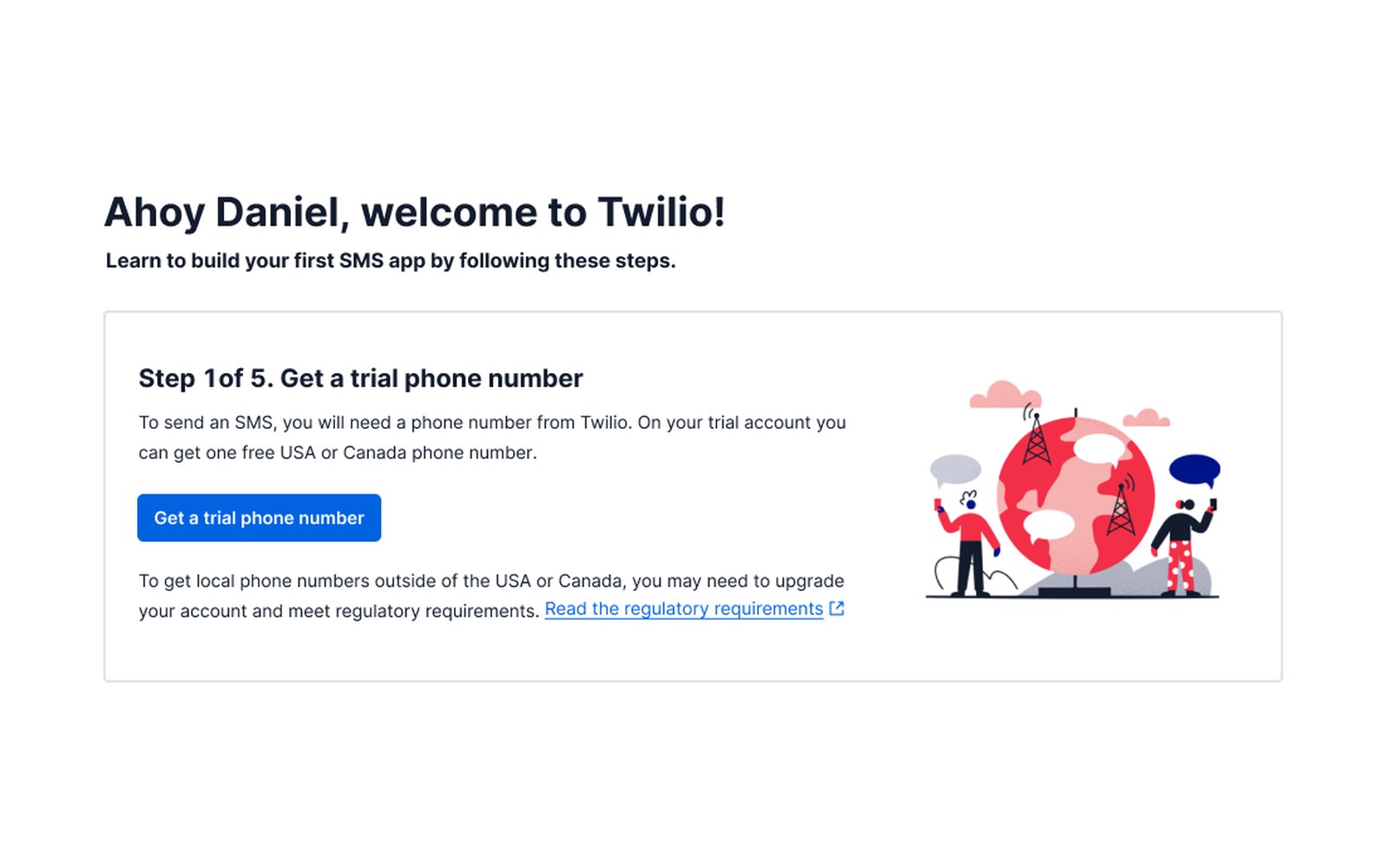
Twilio Messaging console onboarding: Ahoy, welcome to Twilio! Step 1 of 5, get a trial phone number
  • 2020
  • Org design
  • Influence

Establishing design in our top revenue business units

Messaging and Voice, Twilio’s top two revenue business units, had no dedicated design team. I temporarily loaned them experienced designers to demonstrate the value of design, which led both business units to invest in design teams of their own.

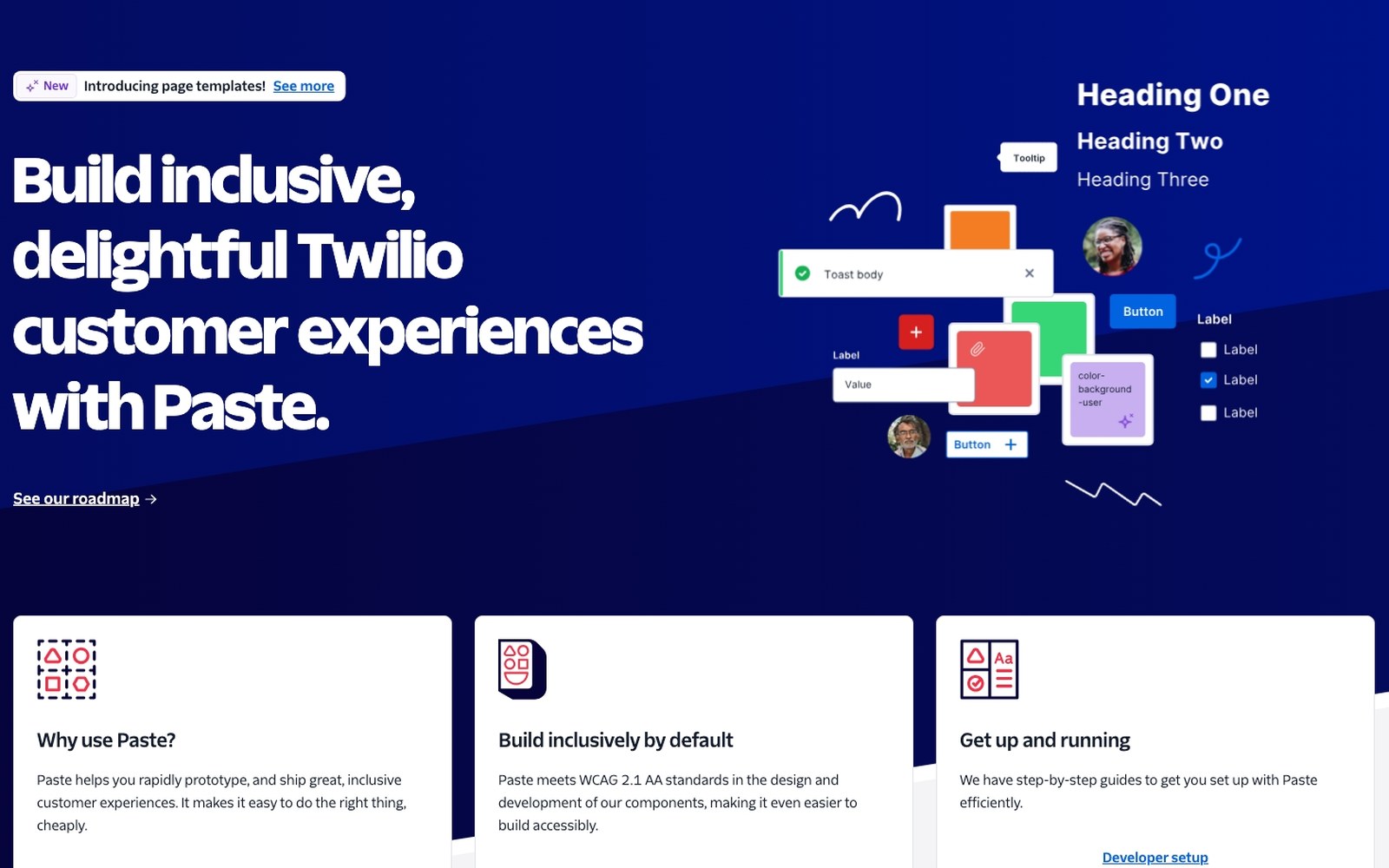
Paste design system website: Build inclusive, delightful Twilio customer experiences
  • 2020
  • Visual design
  • Accessibility
  • Platform

Building Paste, Twilio’s design system

I pooled funding across business units to build Paste, an accessible design system, and drove adoption across the platform, deprecating several outdated front-end frameworks and systems. Paste was adopted by 100% of business units within two years, and with its new, modern visual language, happiness with our visual design rose from 10% to 70% in our design health survey.

Twilio training deck cover: How to Conduct a Research Interview
  • 2020
  • Professional development
  • Enablement

Establishing an R&D training program

I founded an internal professional development program tailored for R&D, training 600+ product managers, designers, and engineers in core product and UX skills. The trainers were our own people: I gave product, design, and engineering teammates a platform to teach classes they were passionate about, like running customer interviews, measuring success, and speeding up decision-making.

Director → VP of UI/UX · 2015 – 2019

SendGrid

Email delivery platform: APIs and tools for transactional and marketing email.

Stage
Venture-backed → 2017 IPO → acquired by Twilio (2019)
My org
UX · 2 → 20
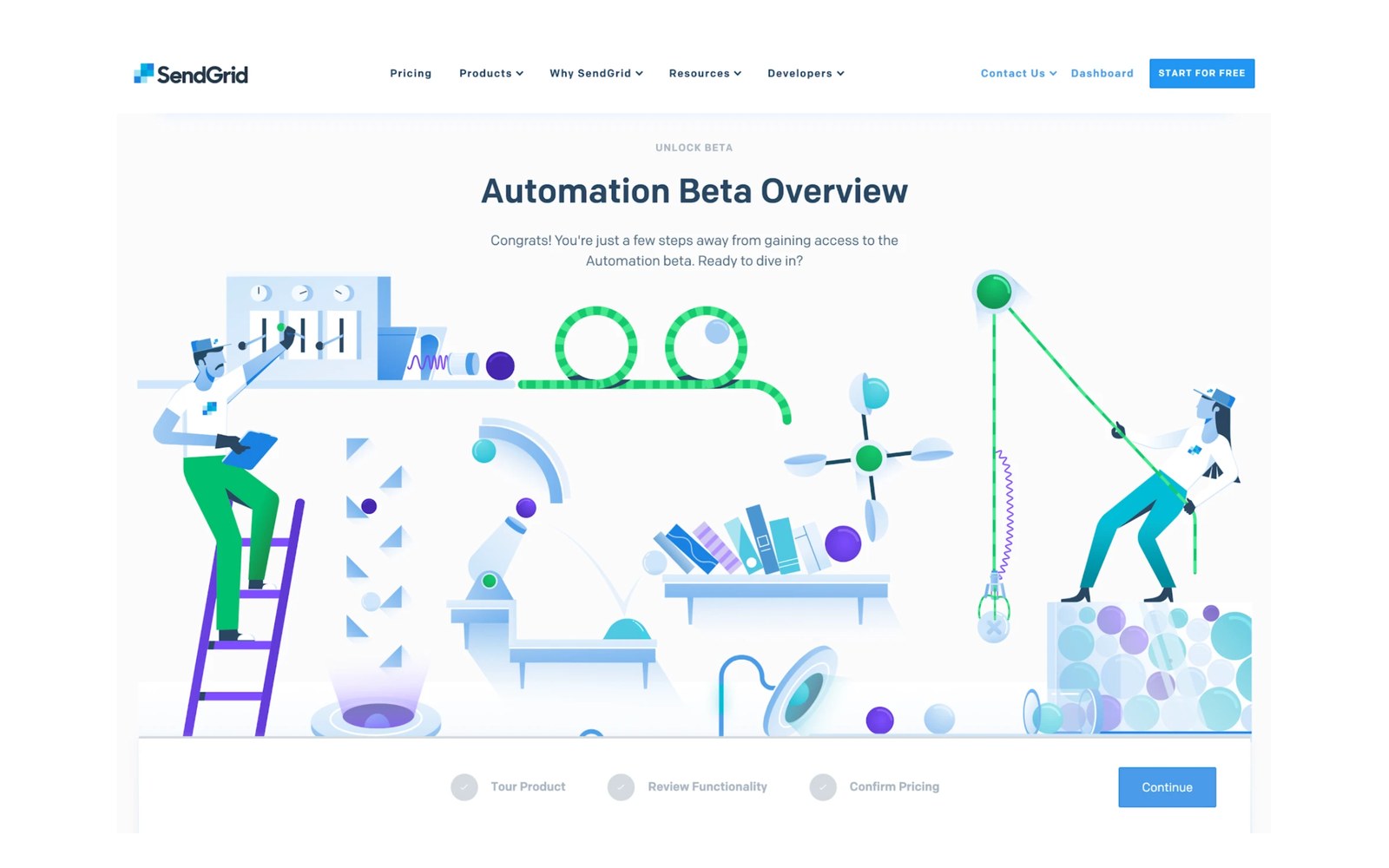
SendGrid Automation Beta Overview page with a playful illustration of two people operating a ball-run machine
  • 2019
  • Visual design
  • Illustration
  • Art direction

Modernizing SendGrid’s look and feel

Toward the end of my time at SendGrid, I introduced a refreshed visual design and a new illustration style, giving the website and product a more modern, playful feel, like this onboarding flow for the Automation beta.

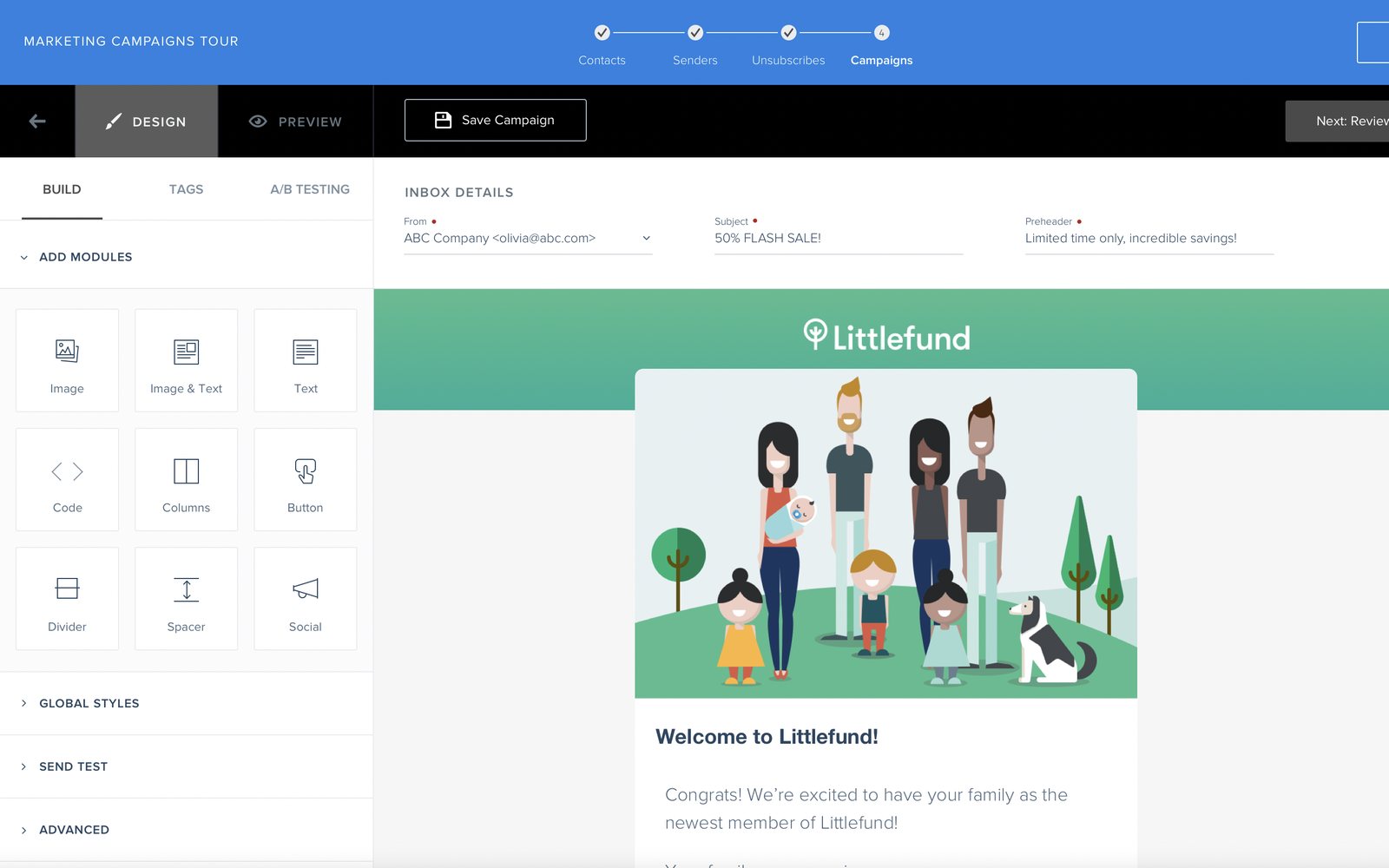
SendGrid Marketing Campaigns editor: drag-and-drop modules beside a live email preview, inside the onboarding tour
  • 2017
  • Multiple personas
  • 0 → 1
  • Revenue growth

Launching Marketing Campaigns for a second persona

SendGrid started as an email API built for developers. We evolved it into a platform that also served a scrappy marketer, often without engineering help, who needed to send one-time campaigns and event-based automations like nurture series. Thanks to a strong experience and a deep understanding of that user, Marketing Campaigns grew from $0 to $30M in revenue within two years of launch.

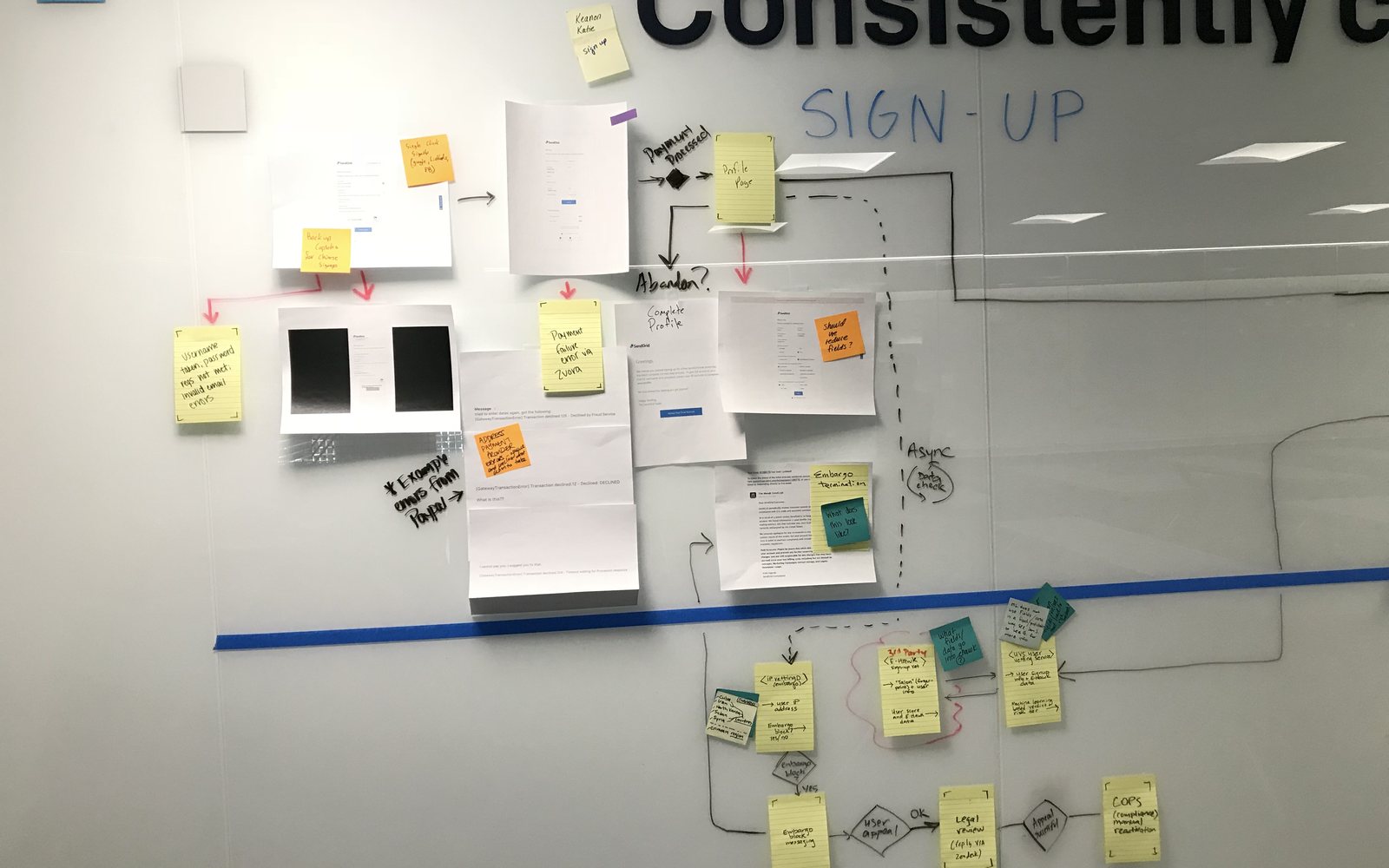
Workshop wall mapping SendGrid’s end-to-end sign-up journey, with printed screens, sticky notes on error and fraud-check paths, and the embargo appeal flow
  • 2016
  • A/B testing
  • Self-service
  • Growth

Optimizing the website and sign-up funnel

I led the creation of SendGrid’s first official funnel, from first visit through upgrade, and a weekly funnel review with Biz Ops and Marketing. A redesigned home page increased sign-up conversion by 26.3% for free accounts and 43.6% for paid, and fixing the “unhappy paths” where new sign-ups were wrongly flagged as fraud lifted overall conversion without sacrificing security.

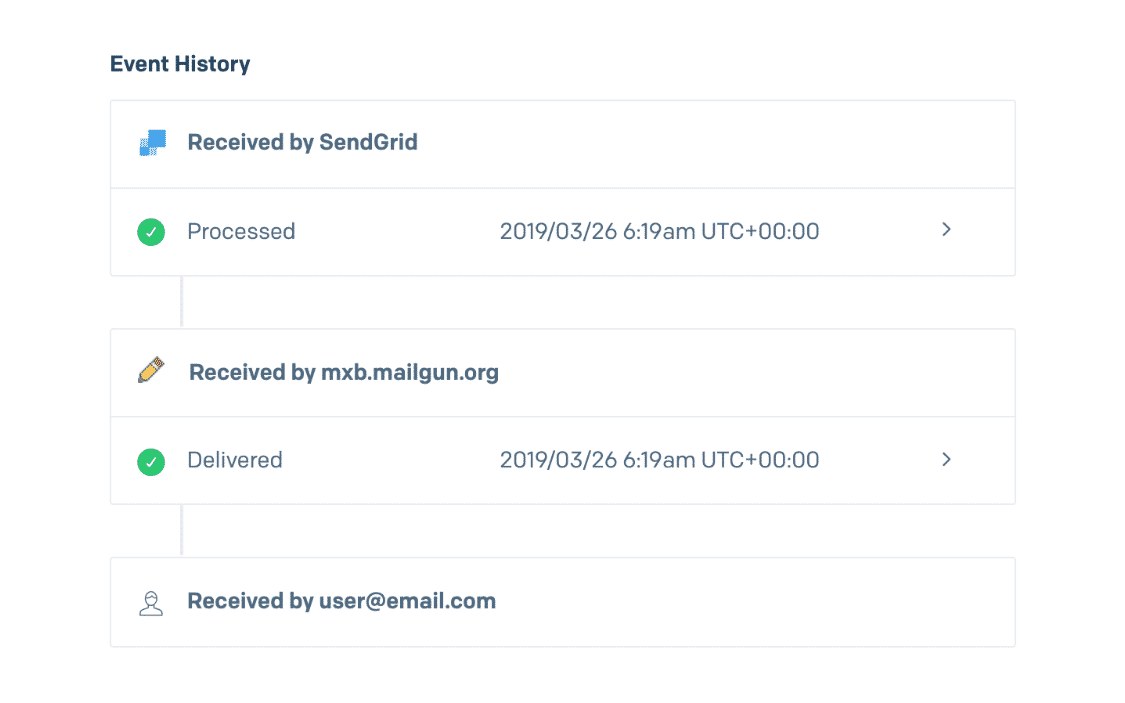
SendGrid Email Activity event history: received by SendGrid, processed, received by the mail server, delivered, and received by the recipient
  • 2018
  • Voice of the customer
  • Prioritization

Making email delivery easy to troubleshoot

For years, our number one customer ask was a way to troubleshoot email delivery, but it required a new data storage solution with real infrastructure costs. Using the clear signal from customer feedback and support channels, I advocated for prioritizing it. Our principal product designer then created an experience that showed each step of an email to a specific recipient (delivered, sent to spam, or blocked), instead of leaving customers to piece it together from separate logs and API calls.

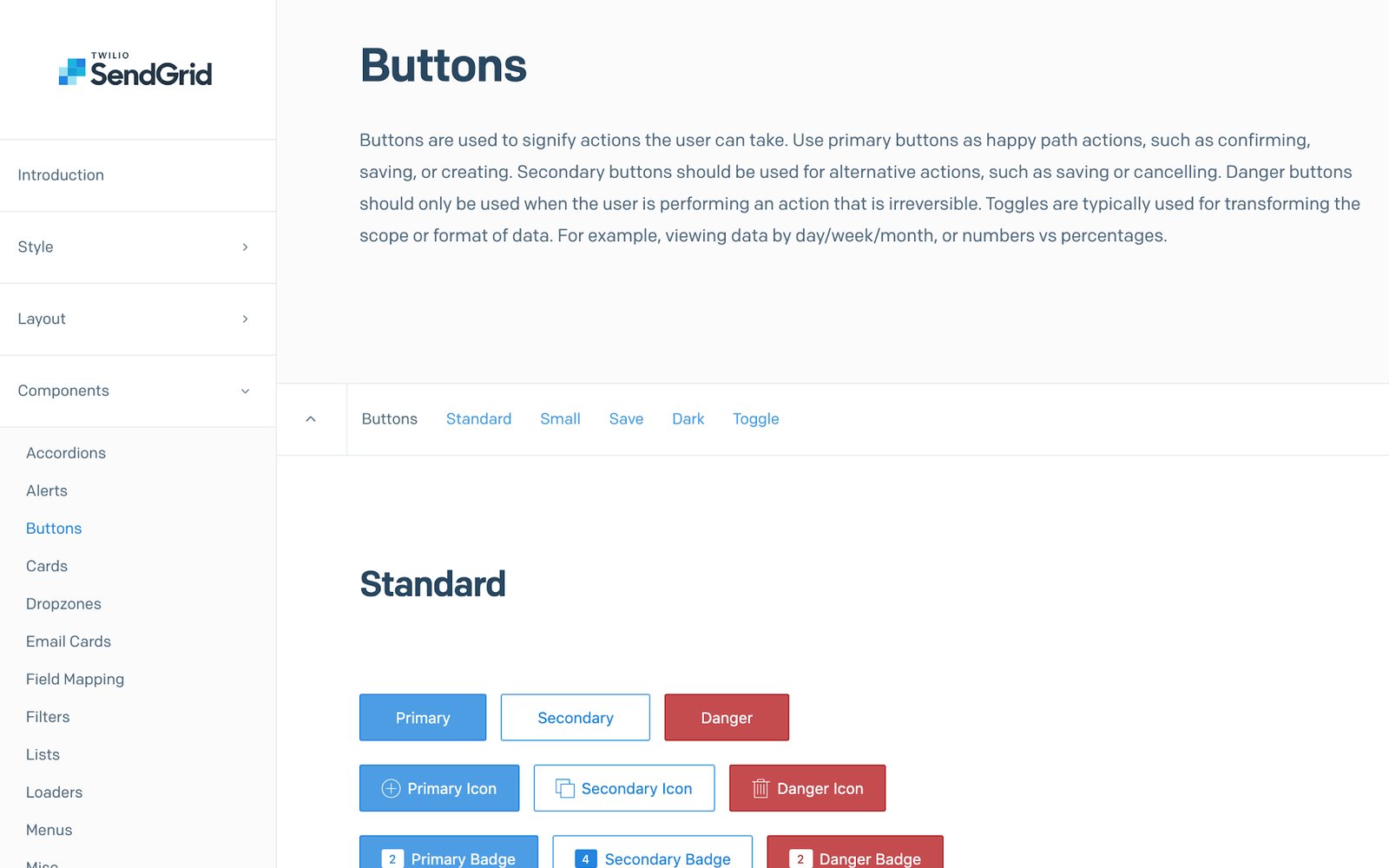
SendGrid design system documentation: the Buttons component page
  • 2016
  • Design systems
  • Tooling

Introducing an early React-based design system

Back when design systems were still rare in the industry, we introduced SendGrid’s first React-based design system, then later revamped it with a new visual language. We were also early adopters of Figma, moving the design team over from Sketch.

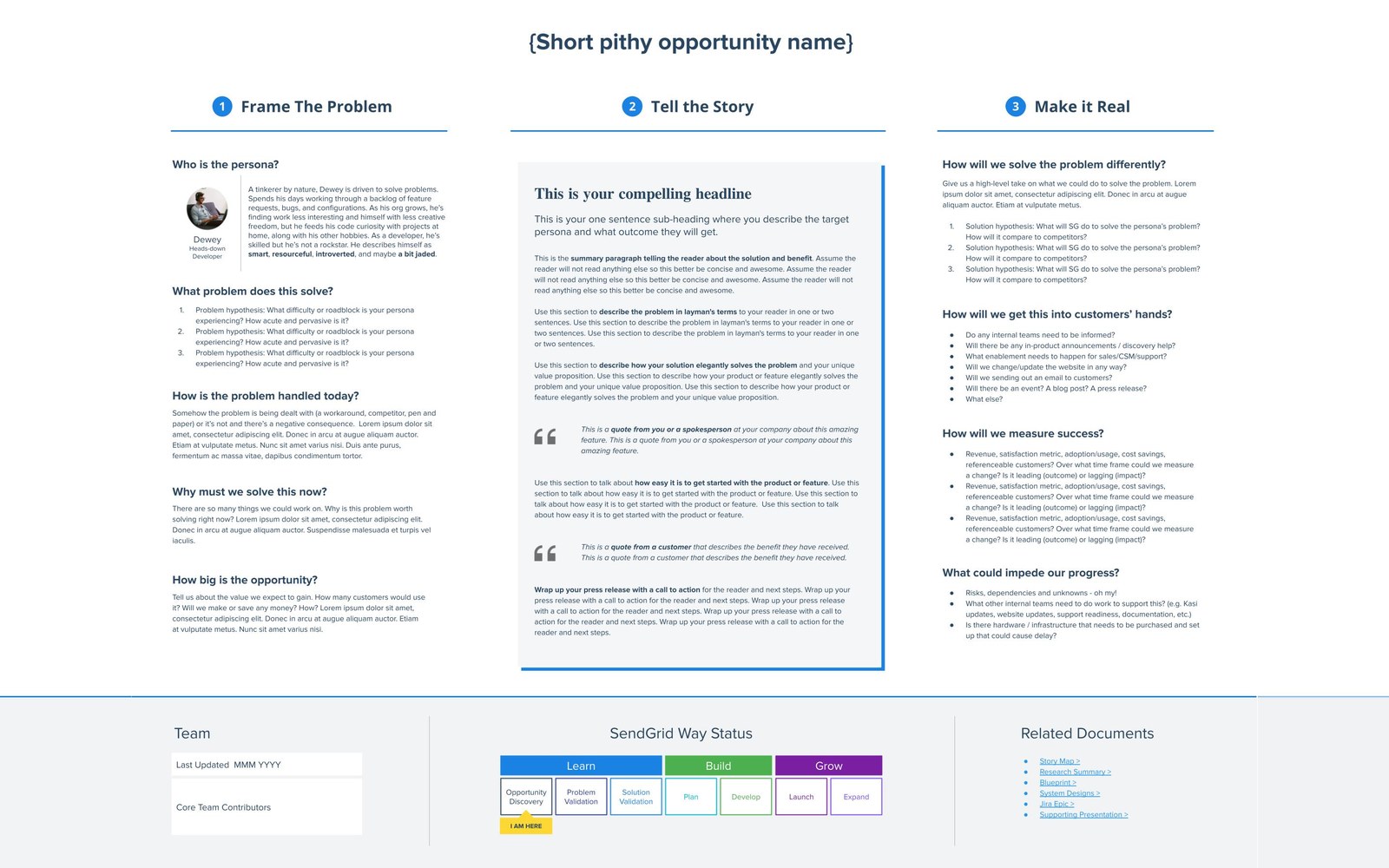
SendGrid Opportunity Canvas template: frame the problem, tell the story, and make it real, with the SendGrid Way status from Learn to Build to Grow
  • 2017
  • Ways of working
  • Cross-functional alignment
  • Coaching

Establishing the SendGrid Way

With our CPO and my engineering and product VP peers, I established a customer-focused, data-informed way of working and trained all of Product, Design, and Engineering on it. I created the Opportunity Canvas, a one-page take on the PRD, set practices for evaluating customer demand and iterating based on data and customer input, and coached teams in leadership product reviews.

Want the full story?

I’m happy to walk through any of this work in more detail.